Related Articles
- Unveiling the Silent Effects of Malware Residue on IoT Devices and What It Means for Your Connected Home Security
- Top 6 Game-Changing Email Security Suites Released Since 2019 That Actually Stop Cyber Trickery
- The Hidden Impact of AI-Driven Voice Assistants on Your Device’s Safety: Risks Nobody Talks About
- Top 6 Stealth Encryption Products Redefining Data Privacy You Haven’t Heard About Since 2019
- Exploring the Influence of Wi-Fi Radiation on Human Sleep Patterns and Cognitive Health in Modern Living
- Top 8 Stealth Malware Cleaners from the Past 5 Years That Outsmart Evasive Threats
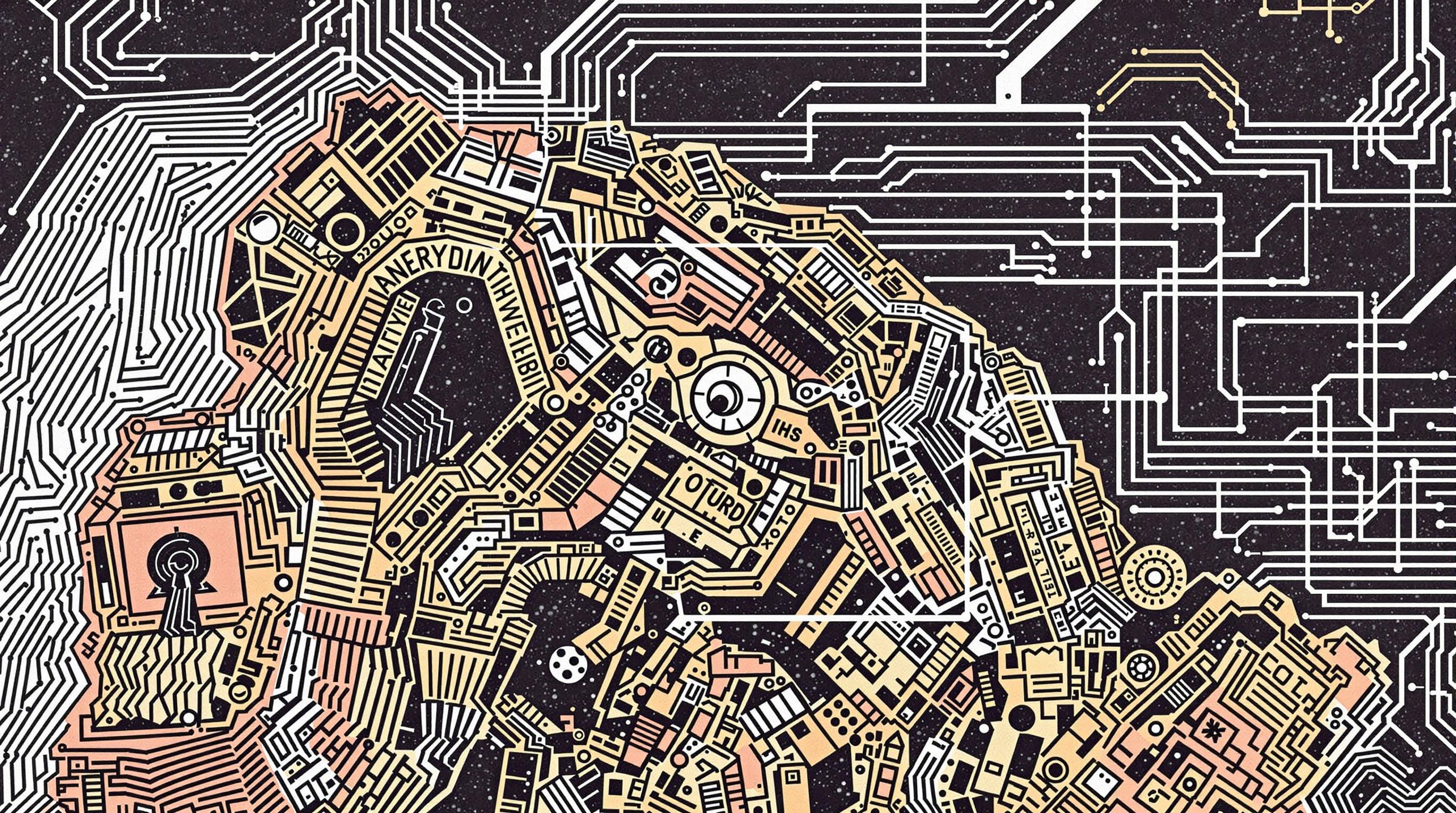
Unlocking Minds: How Ancient Cipher Techniques Inspire Modern Cybersecurity Mysteries
Unlocking Minds: How Ancient Cipher Techniques Inspire Modern Cybersecurity Mysteries
From Caesar ciphers to Enigma machines, ancient encryption methods have paved the way for today's complex cybersecurity frameworks. By revisiting these historical techniques, we can uncover innovative approaches to tackle modern digital threats and deepen our appreciation for the art of codebreaking.
The Timeless Allure of Codes and Ciphers
Imagine: It’s 58 BC, and Julius Caesar sends secret messages to his generals using a simple shift cipher. Fast forward to the 21st century, and cybersecurity experts still rely on the foundational principles of those early codes to protect sensitive data in a world dominated by the internet.
This blend of ancient wisdom and cutting-edge technology might seem surprising, but the roots of modern encryption stretch deep into antiquity. The subtle interplay between disguise and discovery inherent in ciphers has fascinated minds for millennia, from the court of Cleopatra to the halls of MIT.
Ancient Techniques: The Building Blocks of Cybersecurity
Take the Caesar cipher, arguably the most well-known, which is a simple substitution cipher where each letter in the plaintext is shifted a certain number of places down the alphabet. Despite its simplicity, it established the concept of encryption as transformation, a principle that underpins all modern cryptographic algorithms.
The journey from these humble beginnings leads to the complex encryption algorithms securing online banking, emails, and military communications today. Researchers have found that comparing the logic behind ancient ciphers and modern cryptographic protocols enriches our understanding of both fields, fostering innovation.
The Enigma Machine: A Case Study in Complexity
World War II’s Enigma machine involved a far more sophisticated approach than the Caesar cipher, utilizing a combination of mechanical and electrical systems to create an almost infinite number of cipher variations.
Polish and British cryptanalysts’ success in breaking Enigma paved the way for modern computer science and cybersecurity techniques. The story of Enigma, celebrated in popular culture, underscores how imaginative encryption strategies can shape historical outcomes.
Statistics Speak: The Scale of Cyber Threats Today
Consider that in 2023, cyberattacks increased by over 40% globally (Cybersecurity Ventures, 2023), highlighting the urgency for robust security models that can adapt to evolving threats. This escalation necessitates innovative thinking—something history’s codebreakers embodied.
Dr. Emily Carter, a cryptologist at Georgetown University, notes, “Understanding the mindset and constraints of ancient cipher creators inspires unconventional approaches to cryptography that standard textbooks might overlook.”
Humor Break: Even Ancient Spies Needed a Good Laugh
Picture ancient agents with scrolls and wax seals trying to decode messages while whispering, “Did they really think swapping every letter with the next one would keep things secret?” Even then, the cat-and-mouse game of encryption and decryption kept spies tinkering and arguing for smarter methods.
Lessons from History: Adaptability and Creativity
One fascinating example is the polyalphabetic cipher developed by Leon Battista Alberti in the 15th century, which intentionally complicated the simple substitution cipher by varying the shifts. This concept of changing encryption keys parallels modern ideas in cybersecurity, such as rotating encryption keys to avoid decoding by attackers.
Storytelling: The Code That Couldn’t Be Broken
There's the tale of Mary, a young mathematician in the 1940s who contributed to early codebreaking efforts. Working tirelessly on deciphering Axis communications, Mary’s work echoed the ingenuity of earlier cryptographers who laid down the principles behind the puzzles she tackled. Her story reminds us that behind every cipher is a curious mind unwilling to accept "unsolvable."
Conversational Insight: Why Should We Care About Ancient Ciphers?
“So why dig into dusty old codes when we can just rely on digital firewalls?” you might ask.
Great question! The answer lies in mindset. Ancient ciphers teach us problem-solving through lateral thinking and resourcefulness. Moreover, many modern encryption protocols—like asymmetric keys—owe conceptual debts to early methods that balanced secrecy with communication efficiency.
Modern Cybersecurity Inspired by Ancient Artifacts
Researchers studying artifacts such as the 1900-year-old Roman wax tablets have found traces of rudimentary encryption, signaling early efforts to shield information even in analog formats. This historical overlap encourages cybersecurity experts to look beyond zeros and ones and consider human factors, such as trust and deception, vital in securing networks.
The Persuasive Argument for Integrating History into Cybersecurity Education
Incorporating the study of historical encryption into cybersecurity curricula is not a mere academic exercise. It cultivates critical thinking and highlights the evolution of security challenges, making future practitioners better equipped to anticipate and counter threats.
Institutions like Stanford University have adopted modules on classical ciphers, reporting noticeable improvements in students’ problem-solving agility and creativity in digital security projects.
Technology’s New Frontier: Quantum and Beyond
As quantum computers loom on the horizon threatening to render current cryptographic methods obsolete, revisiting the fundamentals might provide clues for resistance strategies. The resilience found in layered, multi-algorithm approaches of the past suggests taking diversified stances rather than relying on a single cryptographic fortress.
Closing Thoughts: Unlocking the Future with the Past
In the ever-shifting battlefield of cybersecurity, the ancient cipher techniques are more than relics; they are teachers.
By blending the creativity, adaptability, and ingenuity preserved over centuries, we can forge new defenses that stand firm in the face of evolving data threats.
Whether you’re a student pondering a career in tech or a seasoned pro guarding networks, embracing the legacy of code creators reminds us that every lock invites a key—and every mystery holds a solution waiting to be uncovered.